How much liquid may make you pass or fail a drug test, one drop? Yes, it is. I have worked in the industrial OEM syringe pump industry for more than 7 years. I’ve seen how fluid controls revolutionise how industries work.
This article will explain what an industrial OEM syringe pump is. I’ll also explore which industries need it most, how to choose the proper one, and real-world examples.
What Is an Industrial OEM Syringe Pump and Why Does It Matter?
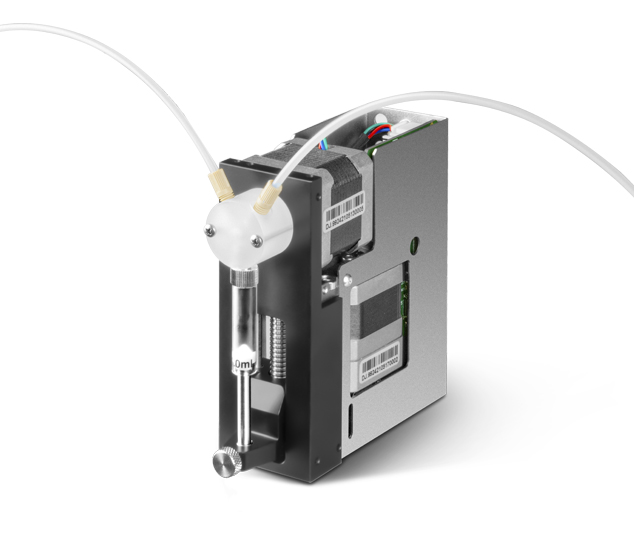
Industrial OEM syringe pump for high precision fluid movement. A plunger is moved inside a syringe by a motor to regulate flow. Bigger machinery and systems install OEM versions. A little miscalculation in volume might create significant issues.
Its major task is precision fluid dispensing, giving the precise quantity, every single time. These pumps handle capacities ranging from microlitres to millilitres. They are silent, small and perform well in automated installations. Manual dosage is slow and unsafe. Those pumps do that.
Key Technical Features of Industrial OEM Syringe Pumps
|
Feature
|
Description
|
Benefit
|
Industry Use
|
|
Flow Rate Range
|
0.001 µL/min to 500 mL/min
|
Ultra-precise dosing
|
Pharma, Lab
|
|
Syringe Size
|
0.5 µL to 140 mL
|
Flexible volume control
|
Biotech, Medical
|
|
Communication
|
RS232, USB, TTL
|
Easy system integration
|
OEM devices
|
|
Drive Type
|
Stepper motor or servo
|
Smooth, repeatable motion
|
All sectors
|
|
Material
|
PTFE, borosilicate, SS
|
Chemical resistance
|
Lab, Industrial
|
Which Pharma Problems Does a Syringe Pump Module Solve Best?
Pharmaceuticals are highly regulated. The products cost a lot. Errors are not allowed. The syringe pump module solves the issue of non-uniform liquid dispensing. When filling vials or preparing IV solutions every microlitre counts. Manual pipetting is prone to human mistake. It wastes expensive substances. It results in batch failures.
This danger is avoided by an embedded syringe pump within a filling machine. It delivers consistent, repeatable flow. It also provides data for regulatory compliance. Pharmaceutical firms require pumps that meet GMP and FDA norms. This may be approved for OEM modules.
How Does Automated Liquid Dispensing Help in Drug Manufacturing?
Reduces batch rejection – up to ±0.5% volume error
Speeds up manufacturing - filling lines run continuously
GMP compliance support – flow data captured for audits
Works with gels, suspensions, and proteins Handles viscous fluids
Easily scales, from lab experiments to massive production quantities
Pharma Application Comparison
|
Application
|
Manual Method Problem
|
OEM Pump Solution
|
Accuracy Gain
|
|
Vial Filling
|
Inconsistent volumes
|
Servo-driven dispensing
|
±0.1% error
|
|
IV Bag Prep
|
Operator fatigue errors
|
Automated flow control
|
99.8% accuracy
|
|
Drug Discovery
|
Pipetting variability
|
Microfluidic module
|
Sub-µL precision
|
|
Stability Testing
|
Sample inconsistency
|
Timed dose delivery
|
Repeatable results
|
Embedded Syringe Pump in Pharma: Key Benefits
A syringe pump is directly integrated into the filling equipment. It saves space and reduces cost per unit. The pump is driven by software from the host system. Dose volumes may be changed without interrupting the queue. It saves time and money for pharma OEM manufacturers.
How Do Biotech Labs Use a Medical Device Pump Module?
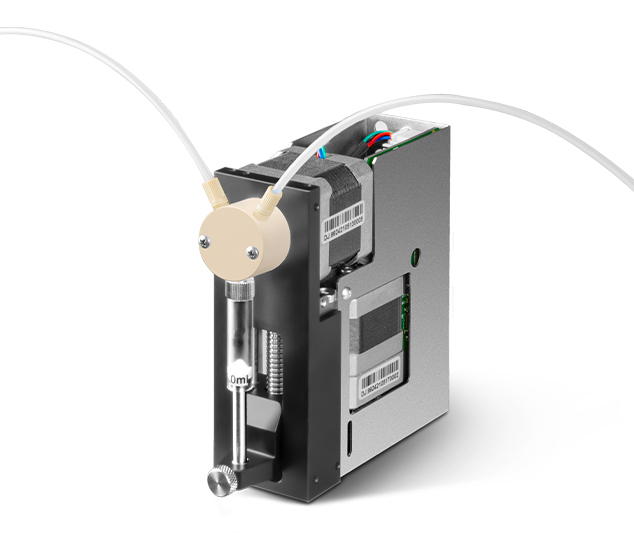
Biotech is a rising industry. It’s all about liquid management. The pump module of the medical gadget performs cell feeding and reagent delivery. Biotech samples are fragile. Rough pumping or wrong quantities may kill cells. It may potentially impact the test findings.
An excellent laboratory syringe pump OEM is soft and precise. It is made of bio-safe materials. It can process extremely tiny volumes and doesn’t create a dead volume waste. Biotech firms commonly embed these pumps into equipment for dependable operation.
What Makes Microfluidic Dispensing Systems Critical in Biotech?
Microfluidic dispensing systems transport small volumes of liquid at the chip level. They are used in:
Point-of-care devices for rapid illness detection
Cell sorting and analysis platforms
Drug response testing using drug-on-chip models
DNA/RNA extraction procedures
Systems for protein production and enzyme assay
Biotech vs. Traditional Liquid Handling: Comparison
|
Factor
|
Traditional Method
|
OEM Syringe Pump
|
Winner
|
|
Volume Precision
|
±5% error
|
±0.5% error
|
OEM Pump
|
|
Speed
|
Slow, manual
|
Fast, automated
|
OEM Pump
|
|
Reproducibility
|
Low
|
Very high
|
OEM Pump
|
|
Sample Safety
|
Risk of contamination
|
Closed-loop, clean
|
OEM Pump
|
In some respects OEM syringe pumps surpass previous approaches. They are more precise, quicker, safer and consistent. Modern biotech and diagnostics are the preferred option.
Advantages and Disadvantages of OEM Pumps in Biotech
Advantages:
High precision for sensitive samples
Small size for small laboratory instruments
Bio-secure accessible materials
Easy integration with lab software
Disadvantages:
Higher initial cost than hand tools
Requires frequent upkeep and calibration
Could need bespoke firmware for particular jobs
Which Lab Sectors Benefit Most from OEM Fluid Handling Solutions?
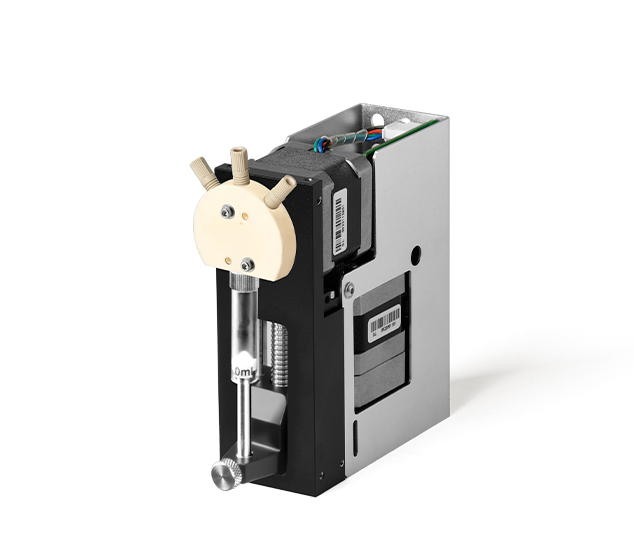
OEM fluid handling solutions are needed by many sorts of laboratories every day. The key concern is the consistency. Labs do the same test over and again. All results must be the same. A laboratory syringe pump OEM unit pumps the same amount every cycle.
Environmental laboratories use them to dilute samples. These are used for additive dosage in food laboratories. They are used to regulate reagents in chemical laboratories. The pump in all cases substitutes slow human labour with quick precision automation.
Real-World Case Studies: OEM Syringe Pumps Across Lab Sectors
|
Lab Sector
|
Use Case
|
Pump Type Used
|
Result Achieved
|
|
Environmental Testing
|
Water sample dilution
|
Multi-channel OEM pump
|
40% faster testing
|
|
Food & Beverage
|
Additive dosing in QC
|
Precision syringe module
|
±0.2% volume accuracy
|
|
Chemical Analysis
|
Reagent mixing for HPLC
|
Embedded pump unit
|
Zero cross-contamination
|
|
Clinical Diagnostics
|
Urine/blood sample prep
|
Medical-grade OEM module
|
FDA-cleared workflow
|
|
Academic Research
|
Microfluidic chip testing
|
Micro syringe pump OEM
|
Sub-µL repeatability
|
How Automated Liquid Dispensing Cuts Lab Costs
Reduces reagent waste – distribute just what is required
Cuts labour hours - deals with repeated pipetting jobs
Reduces mistake rate – fewer repeat tests required
Increases throughput - more samples run per day in laboratories
Flow rate data is routinely documented – improves traceability
Choosing the Right OEM Pump for Your Lab
Here are 5 factors to consider while selecting a laboratory syringe pump OEM:
Volume range – can it accommodate your smallest and greatest dose?
Flow rate accuracy – what is the error margin?
Communication port - USB, RS232 or TTL ?
Do Your Chemicals Suit Wetted Materials?
Certifications: ISO, CE or FDA standards?
What Else Should You Know About Precision Fluid Dispensing Systems?
Precision fluid dispensing is not just for pharma and laboratories. It is also used in electronics, cosmetics, food and medical gadgets. Pumps are used to administer photoresist at the nanolitre level in semiconductors.
In cosmetics, they fill serums without spilling or foaming. They add flavours at specific quantities in food lines. The same issue in all sectors: hand dosage is unreliable. Mistakes are expensive. 4. OEM syringe pumps address this in all these domains.
Key Factors That Make an Industrial OEM Syringe Pump the Right Choice
Compact size - Fits in any OEM machine
Digital control - compatible with PC, PLC or Touch screen
Wide flow range – for micro or bulk dispensing
Long life - parts are durable and minimal maintenance
Adjustable options – stroke, interface and barrel size all vary able
Microfluidic Dispensing System Integration Tips
When you include a microfluidic dispensing system into your device:
Low-dead volume fittings for reducing liquid waste
Match the fluid to the syringe material
First test at low and high flow rates
Closed loop feedback for critical accuracy
Start the design work with your OEM supplier early
FAQs About Industrial OEM Syringe Pump
What is an industrial OEM syringe pump used for?
An industrial OEM syringe pump is a machine that propels liquids with great precision. Used in pharma filling, laboratory testing and biotech devices. Fast, reliable and repeatable fluid control eliminates manual pipetting.
Used for pharmaceutical vial and IV filling lines
Embedded in diagnostics and point-of-care devices
Used for development and testing of microfluidic chips
How accurate is a syringe pump module compared to a manual pipette?
The syringe pump module is substantially more accurate than a hand pipette. The accuracy is greater than ± 0.5 %. The inaccuracy with a manual pipette is frequently ± 2 - 5 %. This is a big issue for regulated or high value work.
Reduce the variability between various operators
Delivers the same amount of volume every time
Logs data for audit and compliance
Can an embedded syringe pump work inside a medical device?
Yes. An embedded syringe pump for integration into medical and diagnostic equipment. It’s composed of medical-grade materials and is smaller in sizes. OEM versions may adhere to ISO 13485 and other major requirements.
Small form factor for portable electronics
Available bio-safe materials
Supports RS232 and USB for device controlling;
Which industries use laboratory syringe pump OEM units most?
The OEM laboratory syringe pumps are mostly utilised in pharma, biotech, diagnostics and food and environmental laboratories. Any lab that does repetitive liquid handling will profit. They are also increasing in the semiconductor and the cosmetics sectors.
Pharma: medication filling, assay, stability testing
Biotech: cell culture, PCR, micro fluidic
Diagnostics: blood, urine and dna prep
Which communication interfaces do OEM fluid handling solutions support?
Most OEM fluid management systems offer RS232, USB and TTL. Some support Ethernet or CAN bus, too. Choose the one that fits your system. Check it out before you purchase.
RS232 is ubiquitous in lab equipment
USB good for PC based installations
TTL is suitable for microcontroller based devices
How do I choose the right precision fluid dispensing pump for my product?
First of all determine the volume range, kind of fluid and precision required. Then, locate a provider that provides bespoke choices and certifications. A solid OEM partner will assist you verify and test before you start production.
First choose your min and max flow rate
Make sure the material is compatible with your fluid
Ask the provider for calibration and accuracy information
Conclusion
Choosing the proper pump partner crucial. Industrial OEM syringe pumps are essential to pharma, biotech and lab industries There is a rising need for precise fluid dispensing and smart OEM fluid handling systems.
Duko Industrial Technology (Shanghai) Co., Ltd. provides embedded syringe pumps, microfluidic dispensing systems and medical device pump modules in accordance with world standards. They are precise, small and simple to include. Their staff is with you from design to manufacturing. Duko is here to serve you immediately. Call us today and get started confidently.